By Diego Alfaro Palma
📷@fotosmetal
[Leer este artículo en español]
It was back in the days when magazines were sold at newsstands and record stores. Some came from Spain or Argentina, wrapped in plastic sleeves and displayed hanging from hooks, one above the other. This particular one was made in Chile, and was very well produced. It was called Into the Void, as a tribute to Black Sabbath. I don’t know how many issues they publish, but inside there were interviews, lots of reviews of albums, movies, and I think a few of books as well. What was special was that it included a CD with the latest seasonal releases. From that issue, I remember learning about some Italian, Chilean, and Canadian bands. However, what stood out the most was “The Sun Fired Blanks” by the Swedish band Dark Tranquillity. Their latest album, Projector, was mentioned in those pages, but at the time I knew almost nothing about it. The song was fast, the vocals were guttural, and the melody advanced through the fabric with an energy greater than electricity. Anyway, my friends and I drank and ate while listening to that album and pausing it several times on that track. Over the years, I affectionately called that type of music “Swedish technology.”
Dark Tranquillity, In Flames, At the Gates, Soilwork, Arch Enemy, but also Katatonia, Amorphis, and Opeth were common at our weekend gatherings. Sometimes under a leafy willow tree near the stream, carrying a battery-powered radio, or at other times at home, where we exchanged records and cassettes, a book by Bukowski or Bradbury. Some of us drew and made patches for our backpacks. But we never asked ourselves why we liked that Nordic sound so much, what it had to do with us living in a rural area on the other side of the world. What ABBA and Aha had been for our parents during the dictatorship, for us it resonated with different decibels and a different imprint.
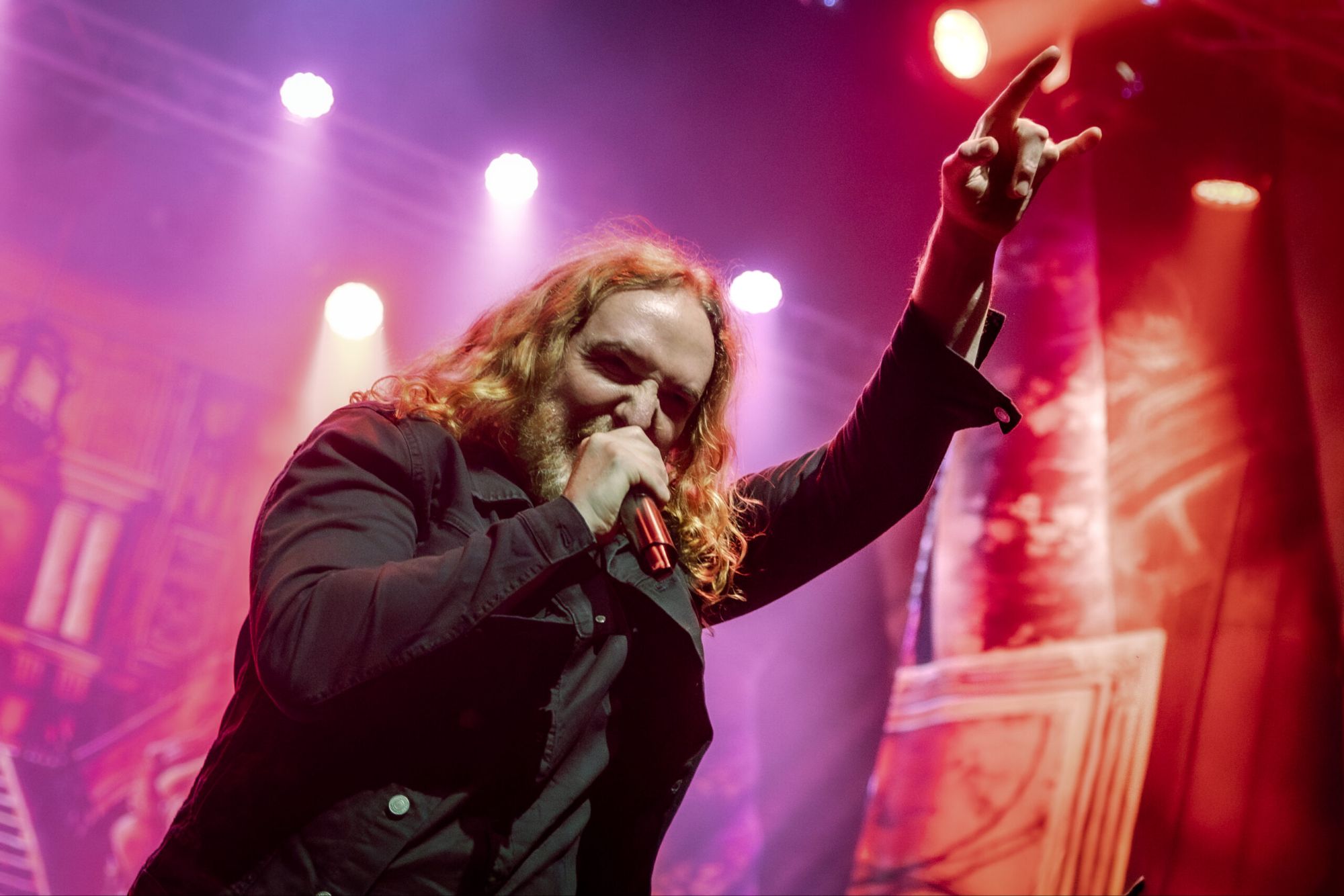
So, a few weeks after buying that magazine, I bought Haven, Dark Tranquillity’s follow-up album to Projector. Back then, immediacy didn’t matter much; you listened to music both forwards and backwards. What’s more, you did all kinds of jobs to get music, such as washing cars, loading trucks, or working in card and stuffed animal stores. But beyond all that, I must say that was one of the first extreme music albums I ever owned, and I fell in love with it, with its synthesizer sounds, machines, mathematical rhythms, and lyrics that took a critical stance against consumerism and the use of technology for destruction. That’s when I understood that Mikael Stanne, the band’s vocalist and leader, was a creative genius who, at a very young age, jumped into a scene that he himself had built: the incredible Gothenburg school.
The old metalheads in my town discriminated that new sound. We respected the “truchas”—as we called them in a play on words with “trasher”—but not enough to endorse the bias. We were boys and girls who listened to Depeche Mode, Radiohead, Pink Floyd, Los Jaivas, and went to free jazz concerts in the summer or orchestra concerts; we snuck into punk gigs and folk clubs. We were sponges, and believe me, not just for music. But the extreme strumming, the riffs, the clean vocals mixed with screaming, appealed to us much more, making us bang our heads and think at the same time. Those atmospheres and the inclusion of acoustic moments, the interplay between clean and guttural vocals, made that small industrial town in Sweden the perfect climate for the birth of a style that managed to unite the delicate and the brutal. And that was perhaps what we were looking for.
I haven’t seen several of those guys and girls since. I see one or two of them from time to time. But I continued listening to Dark Tranquillity and sometimes thought it was my last bastion in extreme music. And I realized that it was as important in my personal repertoire as Jeff Buckley’s Grace or the concerts of Nina Simone or Jorge Ben. Something inside me needed that tension and release of atoms that these Swedes achieved with their particle accelerator. “There In,” “Punish My Heaven,” “Misery’s Crown,” “Not Built to Last,” “Terminus: Where Dead Is Most Alive” became landmarks on the highway of the mind, clearings and dark spots in a forest that often pulled me out of discouragement.
But when its formula truly took hold of my body was when the pandemic struck. I was alone for months in an apartment in Santiago, months after moving from Buenos Aires, where I had spent a long time. Being alone with yourself is no easy task. There are too many demons lurking. And during the pandemic, the world seemed not to be happening outside, but slowly fading away. And in order not to fall, not to falter in these days of uncertainty, I returned to that metal imagined with grandeur. I listened to Atoma, which for many was a revelation, and then Moment, an introverted album, full of sound constructions from the near and unknown future. The lyrics of “Atoma” and “The Dark Unbroken” became pillars of my mental health. If I hadn’t had them at hand, perhaps I would have had a worse time during that period, with unbridled anxiety.
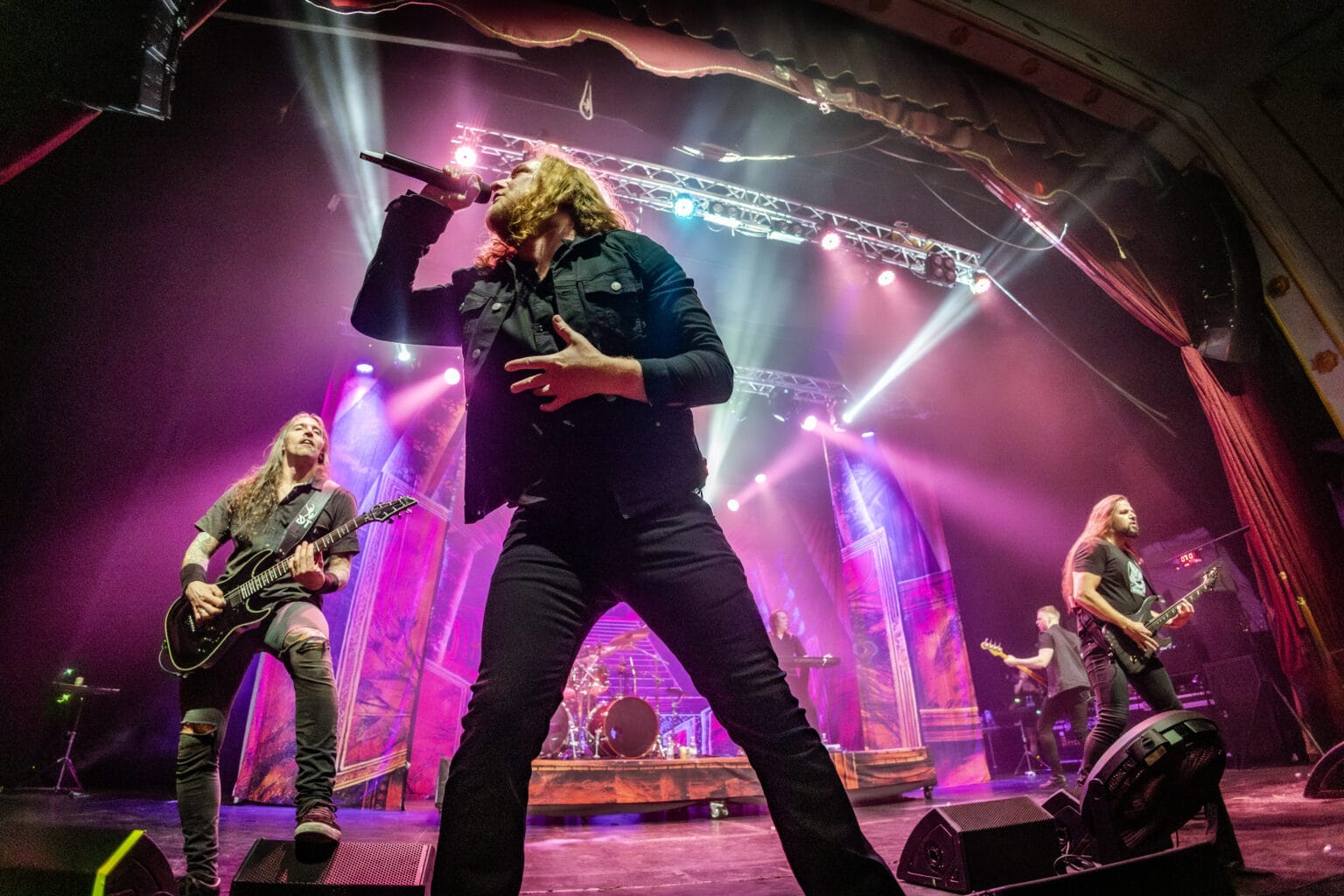
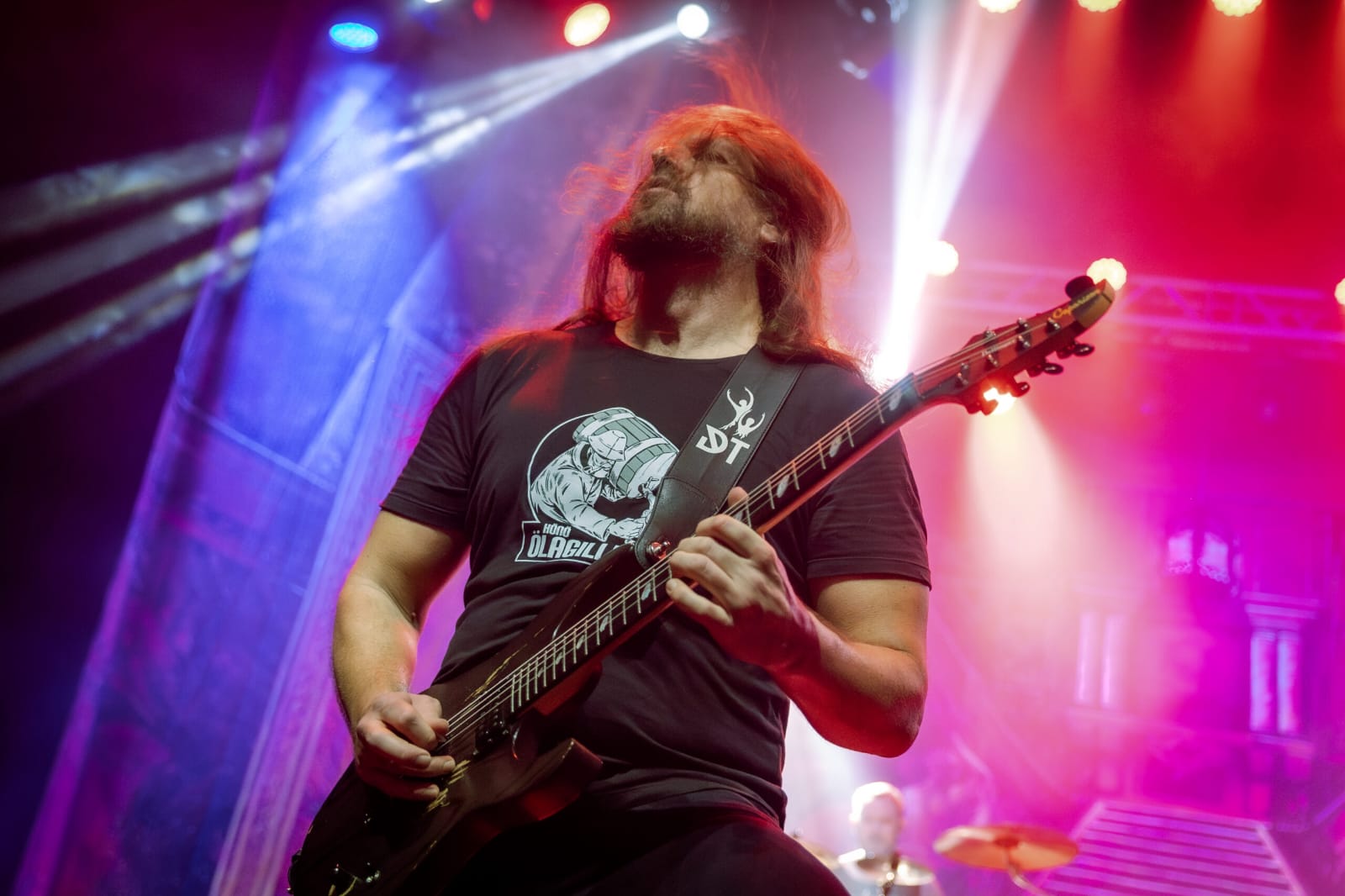
That’s why I admire the world of metal, not only for the skill of its performers, that exceptional quality that some of them have, but rather for the devotion that exists between the audience and the band. Stanne and his bandmates have achieved this and built on it. It’s no coincidence that they performed at the Teatro Cariola on Friday 16th in Santiago, and received as much as they have given over the years in their albums, always crafted with a principle of creative honesty and transformation throughout their existence. Dark Tranquillity seeks something intense and profound in an era full of half-hearted emotions. I won’t talk about everything Stanne himself has had to endure as an artist in his career, supporting his family and, at this stage of his life, dedicating himself 100% to his projects. No, I won’t say anything, except to say that it seems to me that it has been a long road for a band that has not had any major setbacks, has not sold out to trends, has not taken any wrong turns, and has certainly not repeated its winning formulas. That’s why I understand why he ends such an intense concert crying heart out, receiving an endless ovation. That didn’t just happen because they revisited their classic albums The Gallery and Character, but because of their obvious consistency.
Dark Tranquillity put on a flawless concert because that’s all they know how to do. There are no fireworks or elaborate stage sets; all it takes is the tenacity with which they take the stage and sweep away any worries their listeners may have. I myself went to get rid of a horrible and harsh 2025 with them. I went to show my devotion and, to a large extent, to thank them for sustaining a genre that is for the few. These same lines are for the few, for the minority who have integrated into their lives that dark tranquility that we need in good times and bad, when things seemed unfair and something burned inside us.



 El panorama ante nosotros